
Mid-Century & Danish Furniture Restoration in Calgary
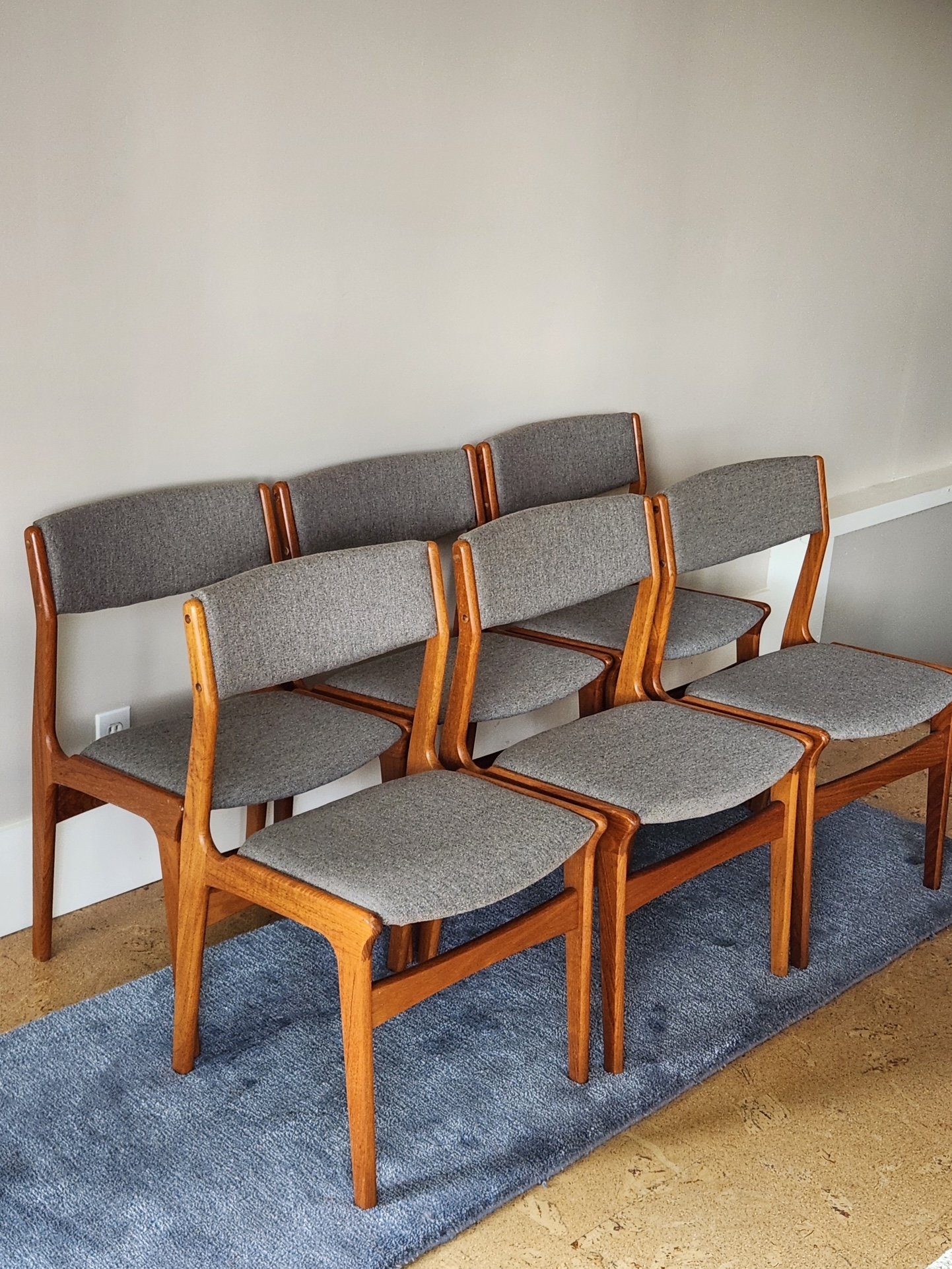
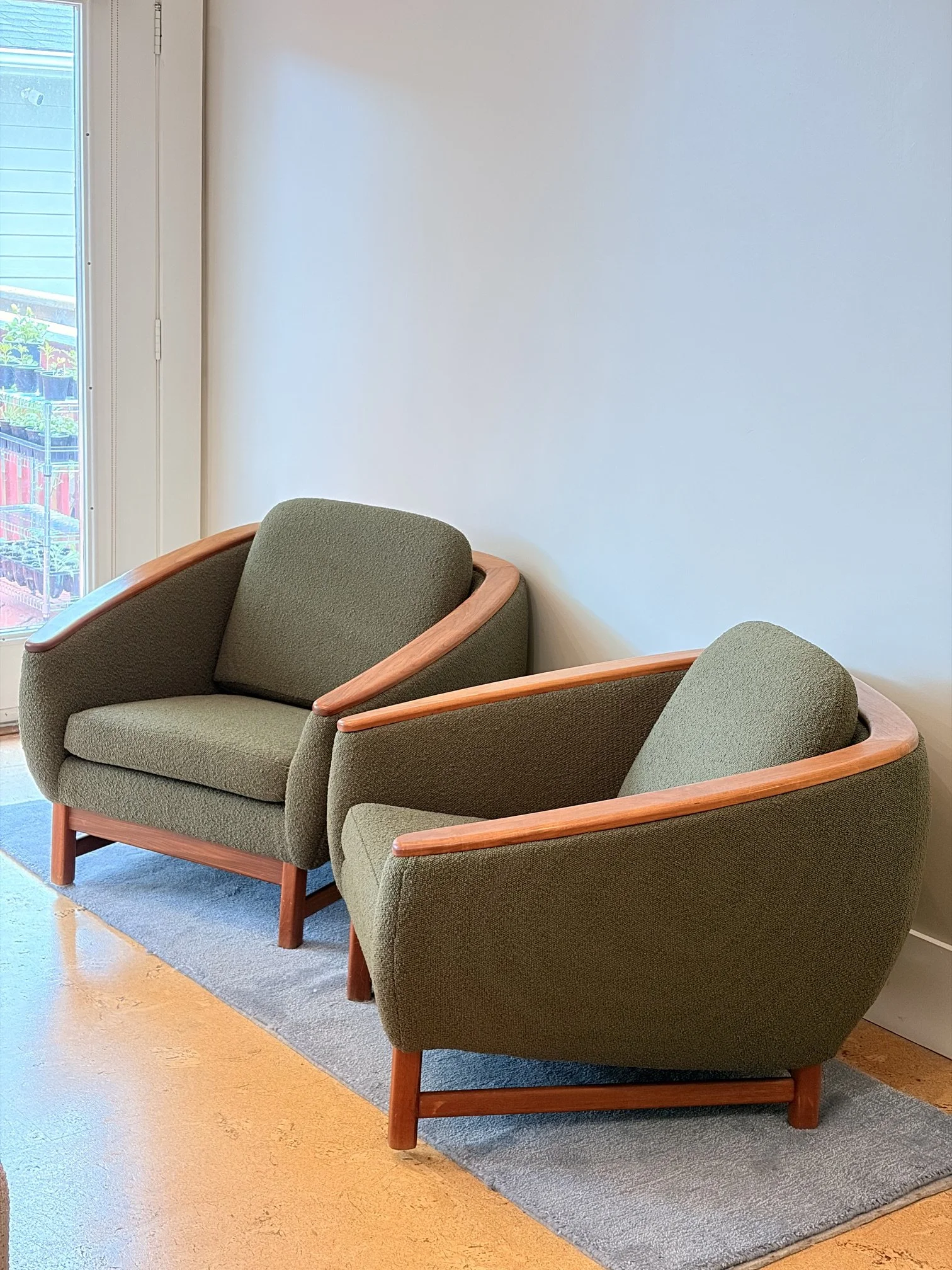
Mid-century modern (MCM) and Danish furniture are what I know best. Teak lounge chairs, Scandinavian dining sets, sculpted frames, clean lines—this type of furniture is deceptively and infamously difficult to work on. But my attention to detail is something I pride myself on, and I truly enjoy bringing these masterpieces back to life.

Why these pieces need a different approach
Mid-century furniture isn’t built like modern furniture, and it can't be treated the same way.
The frame is part of the design. Exposed teak arms and sculpted legs are meant to be seen, and upholstery needs to work with—and often elevate—these features.
The proportions are deliberate. Clean, straight lines are deceptively difficult; attention to proportion, function, and a piece's most basic form often highlights flaws more than it hides them.
The construction is different. These pieces are rarely made of just wood, springs, and staples. They feature compounding curves and unique builds using materials like fiberglass and molded wood or plastic—sometimes bypassing staples entirely in their traditional reupholstery techniques—alongside very complex sewing for complete covers.
Original detail matters. I also think it's important to restore these pieces in alignment with their intended design. It's always my goal to restore furniture in a way that matches or even exceeds its original form.
Designers and makers I've worked on
R. Huber — scoop chairs, tub chairs, barrel sofas and ottomans. A lot of my work comes through these.
Kai Kristiansen — dining chairs, including full sets with wood refinishing.
Arne Dahlén — arm chairs and lounge seating.
Dyrlund — lounge chairs, rebuilt with new foam and webbing.
Plus a good deal of unmarked Danish and Scandinavian furniture — much of it is unbranded and no less well made.
Wool and natural fibres suit these frames particularly well—they have the weight and texture the originals were designed around, and they wear for decades. In fact, wool and natural fibers are often necessary for these pieces. Wool can stretch and move naturally with complex curves and can also be steamed and heated in order to relax it to match these demands.
I work regularly with Kvadrat, Maharam, and Camira, which make fantastic fabrics designed specifically for Scandinavian furniture. I'm happy to help you choose the perfect fabric for your piece, or you are welcome to supply your own, though I do reserve the right to deny the use of any fabric that I believe would be a detriment to the overall result.
Fabric for mid-century pieces
Nearly all authentic mid-century modern furniture—whether Danish, Scandinavian, or otherwise—is definitely worth restoring, whether that's based on its solid construction or the actual value of the piece. Mid-century modern furniture prices have skyrocketed over the last decade, and the style has never truly gone out of style. Just look at the enduring success of IKEA using the very same design philosophies from nearly 80 years ago.
Is my piece worth restoring?
Send a few photos of your piece and I'll come back with a real number, usually within a business day.