
Foam & Cushion Replacement in Calgary
Foam isn’t meant to last forever and can make or break both the comfort of your furniture and how polished it looks. Foam is almost always worth replacing, especially with vintage pieces.
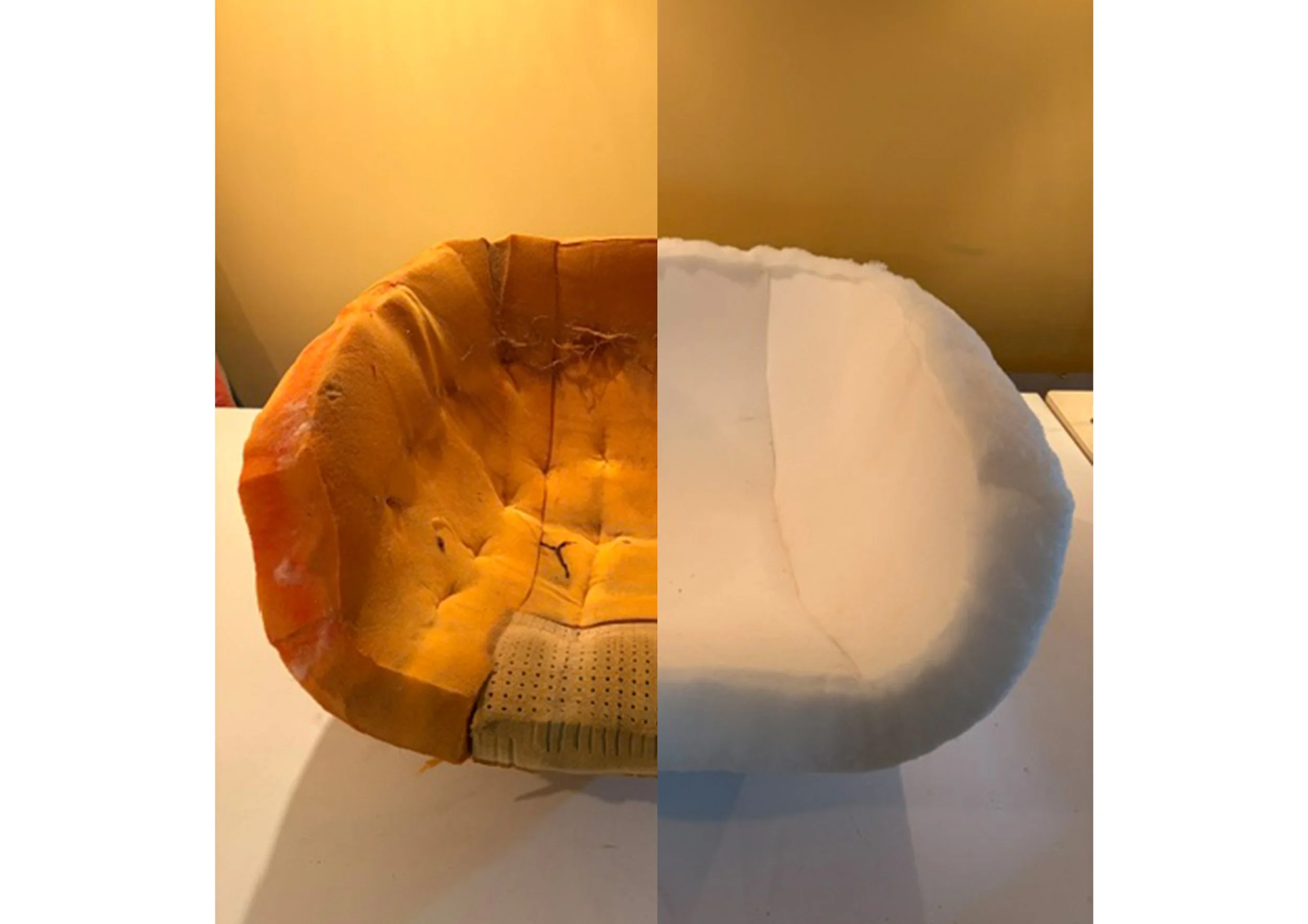
You sink further than you used to, and the seat doesn't spring back
The cushion looks lumpy, compressed, or saggy
You can feel the frame or the springs underneath
One seat has collapsed more than the others (often the center of a sofa)
Getting up out of the furniture feels more difficult than it used to
Signs your foam is at the end of its life
The good news is that this is a very fixable issue and almost never means a piece of furniture is no longer worth restoring.
Old, degrading foam is also very toxic. Once it has passed its intended lifespan, it tends to harden and create dust. Heavy fire retardants used in vintage furniture production break down into dust over time, releasing particles into your air whenever you sit down on your furniture.
Unfortunately, the majority of the time, I have to say no. Fabric that is often 20–50+ years old is no longer structurally sound: fibers break down from friction, UV light degrades its physical structure, things have been spilled on it, it's stretched out, and it's full of old foam dust. Removing staples is also a risk, as the fabric will already have holes, and the extraction process often causes further damage.
Where reuse is possible is with box cushions or areas accessible via a zipper. I can swap out the degraded foam with brand new, high-quality foam that immediately springs the shape of the cushion back to life.
Can I keep my existing fabric?
Choosing foam density is often more complex than choosing purely for comfort. All types of foam have intended use cases, though density also plays a part in longevity. In general, the quality of the foam is the more important factor; just like fabrics, not all foam is created equal. All of the foam I use is made locally, and the products meet programs like CertiPUR-US, which measure volatile organic compounds (VOCs) and ensure materials are free from heavy metals, formaldehyde, or regulated flame retardants.
When I choose foam for a project, I almost always layer different densities to strike the ideal balance of comfort, support, and longevity.
Choosing foam density
Get a quote
Send a few photos of your piece and I'll come back with a real number, usually within a business day.