
Foam & Cushion Replacement in Calgary
The fix for sagging, tired cushions. I replace old compressed foam with fresh, high-quality cushioning to restore proper support, clean lines and long-lasting daily comfort — often without touching your existing fabric.
Before
Primarily for box cushions, yes. If your current fabric covers are still in clean, structurally sound condition and feature zippers or accessible casings, you can swap out compressed inner foam for fresh high-density cushioning. However, if the old fabric is stapled down, worn, faded, or stretched out, replacing the foam alone won't fix the surface wear, and a full recover is usually recommended.
Generally, reusing old fabric is not recommended. Once fabric has been stretched, stapled, and aged over an existing frame, it loses its tension and structural integrity. Furthermore, removing old covers usually involves pulling staples or destroying seams, making the old fabric unusable for a clean re-installation.
Signs your foam is at the end of its life
Can I keep my existing fabric?
Choosing foam density
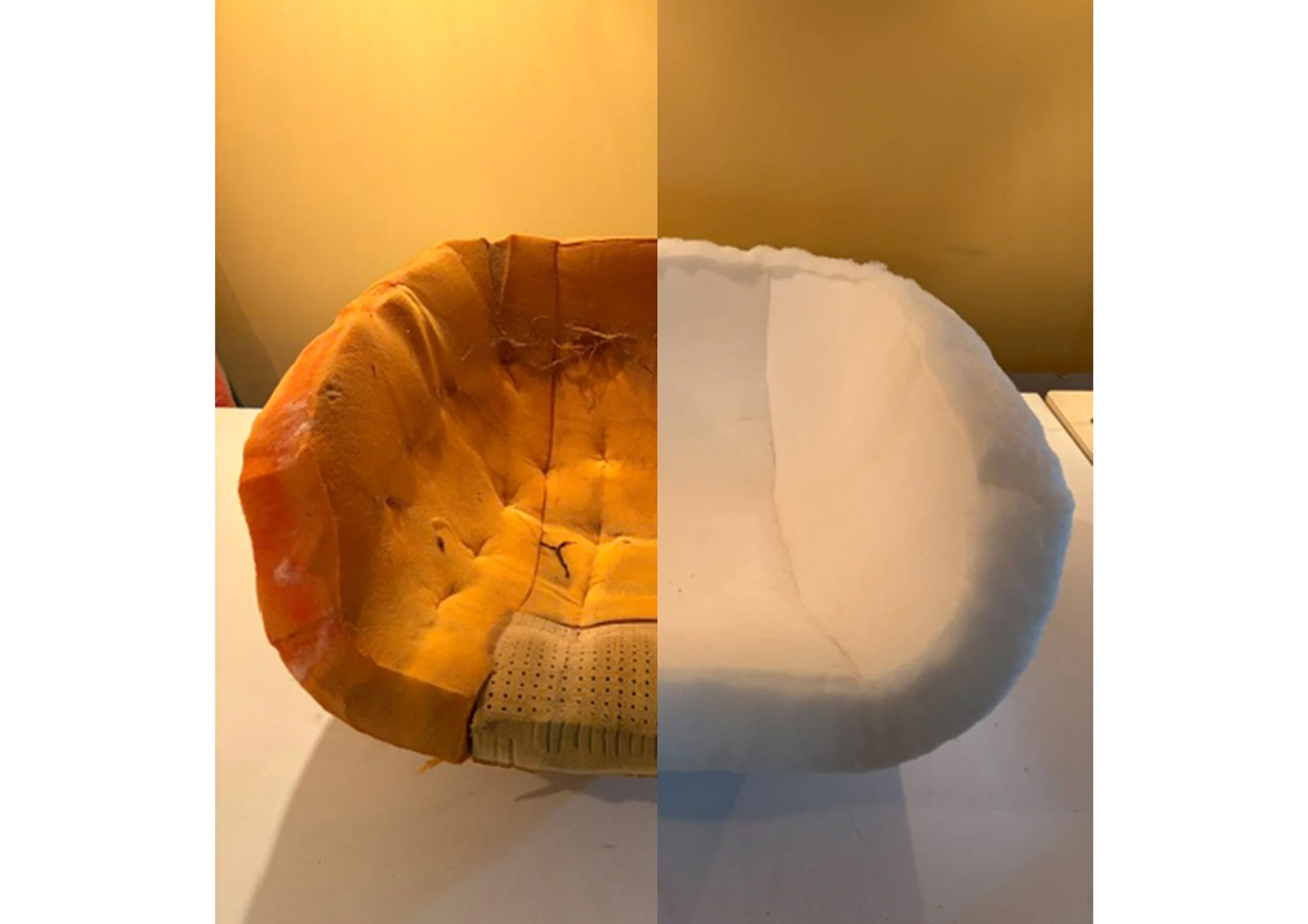
After
You sink further than you used to, and the seat doesn't spring back
The cushion looks flat or wrinkled even after plumping
You can feel the frame or the springs underneath
One seat has collapsed more than the others
Getting up out of it has started to take effort
None of that means the piece is finished. If the frame is solid and the fabric is intact, it's usually just the foam.
Density is what decides how long a cushion lasts, not how soft it feels. Low-density foam feels comfortable in a showroom and collapses within a couple of years. Higher density costs more up front and holds its shape far longer. For a sofa you sit on daily, I'd generally recommend a high-density foam. For a piece that's mostly decorative, something softer is fine. I'll talk it through based on how you actually use it.
Send a few photos of your piece and I'll come back with a real number, usually within a business day.